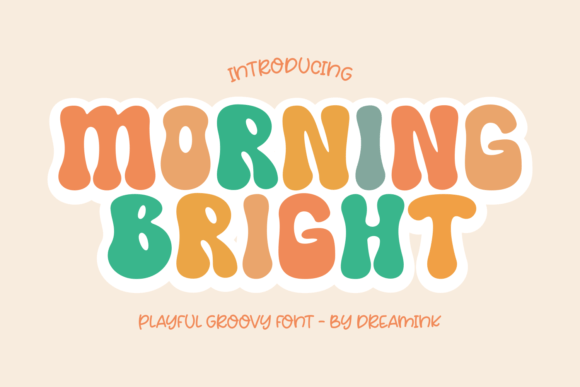
Morning Bright: Elevating Design with Whimsical Typography
Choosing the right typeface is often the difference between a design that feels generic and one that truly resonates with its audience. Morning Bright enters this space as a cute and charming display font, offering a whimsical and slightly quirky personality that can instantly soften rigid layouts. However, many designers, marketers, and small business owners make critical errors when integrating such distinctive fonts into their projects. Understanding how to use this tool correctly ensures that your work remains professional while still capturing that desired sense of joy and approachability.
The appeal of Morning Bright lies in its ability to humanize digital and print media. Whether you are creating social media graphics, packaging for artisanal goods, or headers for a lifestyle blog, this font brings a handcrafted feel. Yet, because it is a display font, it requires careful handling. Misusing it can lead to readability issues, brand inconsistency, or a perceived lack of professionalism. This guide explores common pitfalls and provides practical strategies to help you leverage Morning Bright effectively.
The Trap of Overusing Display Fonts
One of the most frequent mistakes beginners make is treating a display font like a body text font. Morning Bright is designed for impact at larger sizes, such as headlines, logos, or short callouts. When users attempt to use it for paragraphs, captions, or detailed instructions, the result is often difficult to read. The quirky curves and unique character shapes that make it charming at 48 points become visual noise at 12 points.
This misuse affects usability and communication. If your audience struggles to decipher your message, they are likely to disengage. To avoid this, reserve Morning Bright for elements that need to grab attention. Pair it with a clean, neutral sans-serif or a highly legible serif font for the bulk of your text. This contrast not only improves readability but also highlights the charm of the display font by giving it room to breathe. For example, use Morning Bright for a wedding invitation header, but switch to a simple geometric sans-serif for the date, time, and location details.
Ignoring Context and Brand Alignment
Another overlooked detail is the mismatch between font personality and brand identity. While Morning Bright is undeniably cheerful, it may not suit every project. A common error is forcing this whimsical style into contexts that require seriousness, authority, or high-tech precision. Using it for a law firm’s website, a financial report, or industrial equipment manuals can undermine credibility. The font’s playful nature might signal a lack of rigor to potential clients in these sectors.
Before downloading or purchasing, evaluate the emotional tone of your project. Ask yourself if "cute" and "quirky" align with your core message. If you are a children’s book illustrator, a bakery owner, or a creator of handmade crafts, Morning Bright is an excellent fit. However, if your brand relies on trust, stability, or minimalism, consider using it sparingly or choosing a different typeface. Always check your brand guidelines or define your brand voice clearly before committing to a specific typographic style.
Neglecting Technical Legibility and Spacing
Display fonts often have unique spacing requirements that differ from standard system fonts. A significant mistake is leaving default kerning and tracking settings unchanged. Morning Bright may appear too cramped or too loose depending on the specific letter combinations used. Poor spacing can make words look disjointed or cause letters to collide, reducing aesthetic quality and clarity.
To ensure professional results, manually adjust the kerning pairs for prominent headings. Pay special attention to combinations involving letters with wide side bearings, such as 'A', 'V', 'W', and 'Y'. Additionally, consider the line height if you must use the font for multi-line titles. Increasing the leading slightly can prevent the whimsical ascenders and descenders from tangling with adjacent lines. Testing your design at various sizes and on different screens is crucial. What looks balanced on a large desktop monitor may appear cluttered on a mobile device.
Overlooking Licensing and Usage Rights
Many creators rush to download fonts without verifying the license terms. This oversight can lead to legal complications, especially for entrepreneurs and small business owners using the font in commercial products. Some free versions of fonts are restricted to personal use only, meaning you cannot use them for client work, merchandise, or advertising without purchasing a commercial license.
Always read the End User License Agreement (EULA) before incorporating Morning Bright into any project. Determine if the license covers web embedding, app integration, or physical product printing. If you are working for a client, ensure that your usage complies with their distribution needs. Investing in the proper license not only protects you legally but also supports the type designer, encouraging the creation of more high-quality fonts in the future. Keep records of your purchases and licenses for easy reference during audits or client reviews.
Failing to Test Across Mediums
A font that looks stunning on a white background may fail when placed over complex images or printed on textured paper. Designers often forget to test Morning Bright in real-world scenarios. For instance, the thin strokes characteristic of some whimsical fonts might disappear when printed on low-quality stock or viewed on low-resolution screens. Similarly, using light-colored text on a busy background can render the font illegible.
Adopt a rigorous testing protocol. Print samples if the final output is physical. View digital designs on multiple devices and in different lighting conditions. Check contrast ratios to ensure accessibility standards are met. If the font loses its charm or clarity in certain environments, adjust the color, size, or background. Sometimes, adding a subtle drop shadow or outline can help maintain visibility without compromising the font’s aesthetic. These small adjustments demonstrate attention to detail and enhance the overall user experience.
Making Informed Decisions
Integrating Morning Bright into your design toolkit can yield delightful results when approached with intention. By avoiding common mistakes such as overuse, context mismatch, poor spacing, licensing ignorance, and inadequate testing, you ensure that your designs remain effective and professional. Remember that typography is a functional art form; it must communicate clearly while evoking the right emotion.
Take the time to experiment with pairings, adjust spacing meticulously, and verify usage rights. When used confidently and correctly, this font will brighten up your projects and help you connect with your audience on a more personal level. Whether you are a seasoned designer or a hobbyist just starting out, respecting the nuances of display typography will elevate the quality of your work and increase satisfaction with your final outcomes.