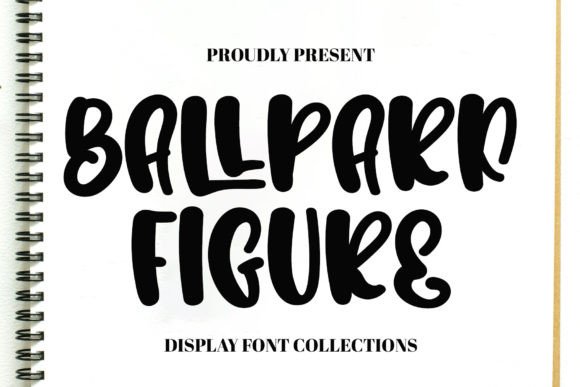
Ballpark Figure: A Playful Display Font for Cheerful Designs
There is a distinct moment in any creative project when the tone shifts from serious to spirited. You are no longer trying to convey corporate stability or minimalist luxury; instead, you want to evoke joy, nostalgia, and approachability. This is where Ballpark Figure enters the conversation. As a fun and quirky display font, it serves as a powerful tool for designers and content creators who need to break through the noise with personality. Unlike rigid geometric sans serif fonts or traditional serif typefaces that demand respect, this typeface invites interaction. It is particularly effective for children’s themed designs, but its utility extends far beyond the playground, offering a unique visual voice for brands that prioritize warmth and authenticity.
Visual Personality and Design Characteristics
To understand why Ballpark Figure works, we must first look at its anatomy. The font features irregular stroke widths and slightly uneven baselines, mimicking the natural imperfections of hand-lettering without sacrificing legibility. This gives it an organic, human feel that resonates with audiences tired of overly polished, sterile digital aesthetics. The letterforms are rounded and open, creating a sense of friendliness and accessibility. When rendered in bright colors, these characteristics amplify, making the text pop against various backgrounds.
One of the most significant technical advantages of this typeface is its PUA encoding. For those unfamiliar with typography terminology, PUA (Private Use Area) encoding allows users to access special glyphs, ligatures, and alternate characters directly through their standard keyboard shortcuts or character map tools. This means you are not limited to the basic alphabet. You can easily insert decorative elements, swashes, or connected letters that add flair to your logo design or headline. This ease of access streamlines the workflow for busy marketers and small business owners who may not have advanced typesetting skills but still require professional-looking results.
Strategic Applications Across Media
While Ballpark Figure is often categorized as a creative font for juvenile projects, limiting it to birthday invitations or school newsletters would be a mistake. Its versatility shines in any context where brand identity needs to feel approachable and energetic. Consider the following applications where this display font excels:
- Packaging Design: In the crowded retail environment, products aimed at families or lifestyle markets benefit from packaging that feels handmade and caring. Using this font on labels for organic snacks, artisanal toys, or craft supplies can significantly enhance shelf appeal.
- Social Media Graphics: Platforms like Instagram and Pinterest thrive on visual engagement. A quote card or promotional banner using Ballpark Figure stops the scroll because it contrasts sharply with the standard sans serif fonts used by most algorithms and templates.
- Editorial Design: For magazines or blogs focusing on parenting, hobbies, or local community events, this typeface adds editorial charm to pull quotes and section headers, breaking up dense text blocks and guiding the reader’s eye.
- Web Design Elements: While not suitable for long-body text due to its decorative nature, it is perfect for hero sections, call-to-action buttons, and navigation menus on websites for creative agencies, bakeries, or educational platforms.
The key to successful implementation lies in understanding the balance between whimsy and professionalism. In brand identity development, consistency is crucial. If your brand voice is playful, Ballpark Figure can become a recognizable asset across all touchpoints, from business cards to email newsletters. However, it should be used sparingly to maintain impact. Overuse can dilute its effectiveness and make the design appear cluttered.
Enhancing Readability and Visual Hierarchy
A common misconception about display fonts is that they compromise readability. While it is true that Ballpark Figure is not designed for paragraphs of body copy, it excels in establishing visual hierarchy. In modern typography, hierarchy guides the viewer through the content, telling them what is most important. By using this font for headlines and subheadings, you create a clear distinction between primary messages and supporting information.
When paired correctly, this font enhances overall comprehension. For instance, combining Ballpark Figure with a clean, neutral sans serif font for body text creates a harmonious contrast. The playful header draws attention, while the simple body font ensures the message is easily digestible. This pairing strategy is essential for maintaining professionalism while injecting personality. It signals to the audience that the brand is fun but also competent and organized.
Furthermore, the font’s unique shapes contribute to brand recognition. In a sea of generic Helvetica clones, a distinctive typeface acts as a visual anchor. Customers begin to associate the specific quirks of the letters with your brand’s values. This subtle psychological cue builds trust and familiarity, which are critical components of customer loyalty.
Practical Guidance for Selection and Licensing
Before integrating Ballpark Figure into your next project, consider these practical steps to ensure optimal results:
- Evaluate Project Fit: Ask yourself if the tone of your project aligns with cheerfulness and informality. If you are designing for a law firm or a financial institution, this font may not be appropriate. However, for a summer camp, a pet store, or a creative workshop, it is an ideal choice.
- Test Font Pairings: Experiment with different combinations. Try pairing it with a light weight sans serif for a modern look, or a classic serif for a vintage-inspired aesthetic. Ensure there is enough contrast in weight and style to prevent visual competition.
- Review Included Styles: Check the full character set provided with the font file. Utilize the PUA-encoded glyphs to add unique touches to your designs. Test these characters in your design software to ensure they render correctly across different platforms.
- Consider Readability at Different Sizes: Always test the font at various scales. While it looks great in large headings, ensure it remains legible when used in smaller sizes for captions or tags. Adjust tracking and leading as needed to improve clarity.
- Verify Commercial Licensing: As a commercial font, it is essential to review the license agreement before using it in client work or products for sale. Ensure that your intended use case is covered under the purchased license to avoid legal issues.
In the realm of design assets, finding a typeface that balances uniqueness with usability is rare. Ballpark Figure manages this balance effectively. It offers the charm of a handwritten font with the structural integrity required for professional applications. Whether you are a seasoned graphic designer refining a brand’s visual language or a small business owner creating your first marketing flyer, this font provides the flexibility and character needed to make a lasting impression.
Ultimately, typography is more than just arranging letters; it is about conveying emotion and intent. By choosing a typeface like Ballpark Figure, you are making a deliberate statement about your brand’s personality. You are signaling that you value creativity, joy, and human connection. In a digital landscape often dominated by cold efficiency, this warmth can be your greatest competitive advantage. Use it wisely, pair it thoughtfully, and let your designs speak with a voice that is distinctly yours.