Unlocking Creativity: How Puzzle Zone Transforms Typography into Playful Design
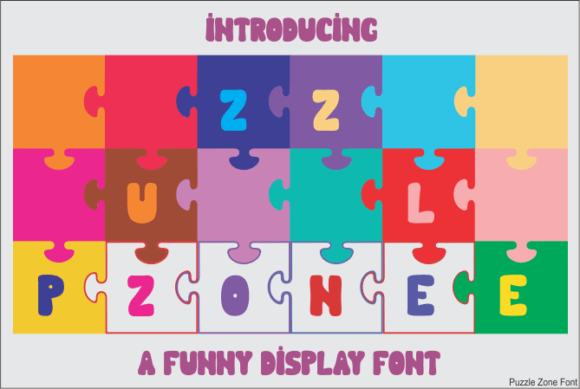
In the vast landscape of digital typography, most fonts strive for invisibility. They aim to be legible, clean, and unobtrusive, allowing the message to take center stage without drawing attention to the medium itself. However, there is a growing movement in graphic design that challenges this norm, seeking typefaces that are not just vessels for text but active participants in the visual narrative. Enter Puzzle Zone, an adorable font that defies conventional expectations by functioning literally as a puzzle. This unique typeface does more than display letters; it invites interaction, offering all the pieces needed to make a complete square while providing a wide variety of letters, numbers, and symbols that you can put on each piece.
For designers, educators, and hobbyists alike, Puzzle Zone represents a fascinating intersection of utility and whimsy. It helps you greatly in creating beautiful designs that capture attention through structural intrigue rather than mere aesthetic flair. But what exactly makes this font stand out in a saturated market, and how can you leverage its unique mechanics in your next project?
The Mechanics of Modular Typography
At first glance, Puzzle Zone appears to be a playful, rounded sans-serif typeface with a charming, hand-drawn quality. Yet, its true innovation lies in its construction. Unlike standard fonts where each character is a standalone glyph, this typeface is built on a modular grid system. Each letter, number, or symbol is designed to fit perfectly within a square tile, complete with interlocking edges reminiscent of jigsaw puzzle pieces. This means that when you type out a word, you are not just arranging characters; you are assembling a cohesive visual block.
This structural integrity offers a distinct advantage for layout design. In traditional typography, kerning and leading require meticulous adjustment to ensure visual balance. With Puzzle Zone, the spacing is inherently standardized because every character occupies the same physical footprint. This uniformity creates a satisfying sense of order, making it ideal for projects where grid-based alignment is crucial. Whether you are designing a poster, a social media graphic, or a packaging label, the font ensures that your text block remains visually stable and aesthetically pleasing.
Beyond Letters: A Comprehensive Symbol Set
One of the most practical aspects of Puzzle Zone is its extensive library. It is not limited to the basic Latin alphabet. The font includes a wide variety of letters, numbers, and symbols that you can put on each piece, ensuring that you can construct complex messages without breaking the visual pattern. From punctuation marks to mathematical symbols, and even decorative icons, every element is designed to interlock seamlessly. This comprehensiveness allows for greater creative freedom. You are not forced to switch fonts or break the puzzle aesthetic when you need to include a phone number, a price tag, or a special character.
Consider the implications for educational materials. Teachers and content creators can use Puzzle Zone to create engaging worksheets where students must physically or digitally assemble words. The tactile nature of the design encourages interaction, making learning processes more dynamic. Similarly, in marketing, brands can use the font to create "solve-the-message" campaigns, inviting customers to engage with the content on a deeper level by deciphering the puzzle-like arrangement of letters.
Integrating Puzzle Zone into Modern Workflows
Adopting a novelty font like Puzzle Zone requires a shift in mindset. It is not a tool for long-form body text; readability over extended passages is compromised by its decorative nature. Instead, it thrives in headlines, logos, short captions, and illustrative elements. Here is how you can effectively integrate it into various design workflows:
- Brand Identity: For brands that want to convey approachability, creativity, and fun, Puzzle Zone serves as an excellent primary typeface for logos and taglines. Its modular nature suggests building blocks, collaboration, and problem-solving, which are powerful brand values for tech startups, educational platforms, and creative agencies.
- Social Media Graphics: In the fast-paced world of Instagram and TikTok, visuals must stop the scroll. The bold, geometric shapes of Puzzle Zone create high-contrast images that stand out in crowded feeds. Use it to highlight key quotes or promotional offers, leveraging the puzzle aesthetic to create a sense of completeness and satisfaction.
- Packaging Design: Product packaging often relies on texture and structure. Using Puzzle Zone on boxes or labels can mimic the physical experience of unboxing. The interlocking lines of the font can guide the eye across the package, creating a unified look that feels both modern and nostalgic.
When working with this font, it is essential to consider color. Because the shapes are distinct and separate, using contrasting colors for different pieces can enhance the puzzle effect. Alternatively, a monochromatic palette can emphasize the silhouette and form of the letters, creating a more subtle, sophisticated look. The choice depends on the desired emotional impact: vibrant colors evoke energy and playfulness, while muted tones suggest elegance and precision.
Technical Considerations and Best Practices
While Puzzle Zone is user-friendly, there are technical nuances to keep in mind. Since the font relies on precise alignment, ensure that your design software has snapping guides enabled. This will help you maintain the perfect grid structure, especially if you are manually adjusting individual glyphs for custom compositions. Additionally, because the font includes many unique symbols, familiarize yourself with the glyph map. Knowing where specific characters are located will speed up your workflow and allow you to experiment with unexpected combinations.
Another consideration is scalability. While the font looks sharp at large sizes, intricate details may get lost when scaled down significantly. Test your designs at various sizes to ensure that the interlocking edges remain visible and the letters remain legible. If the puzzle effect becomes muddy at smaller sizes, consider simplifying the design by using fewer characters or increasing the spacing between puzzle blocks.
The Psychological Appeal of Playful Design
Why does Puzzle Zone resonate with audiences? Part of its appeal lies in the psychological concept of "completion." Humans have an innate desire to see patterns finished and puzzles solved. When viewers encounter text arranged in this format, their brains automatically engage in the process of recognition and assembly. This micro-interaction creates a moment of delight and engagement that standard typography cannot achieve. It transforms passive reading into active viewing.
Furthermore, the "adorable" quality of the font softens the often rigid nature of digital communication. In an era where online interactions can feel cold or transactional, using a font that feels handcrafted and playful adds a layer of warmth and humanity. It signals that the creator has invested time and thought into the presentation, fostering a stronger connection with the audience.
In conclusion, Puzzle Zone is more than just a novelty item; it is a versatile design tool that bridges the gap between function and fun. By offering all the pieces needed to make a complete square and including a wide variety of letters, numbers, and symbols, it empowers designers to create beautiful, interactive, and memorable visuals. Whether you are crafting a brand identity, designing educational materials, or simply looking to add a touch of whimsy to your projects, this font provides the structural foundation and creative flexibility to bring your ideas to life. Embrace the puzzle, and watch your designs come together in ways you never imagined.