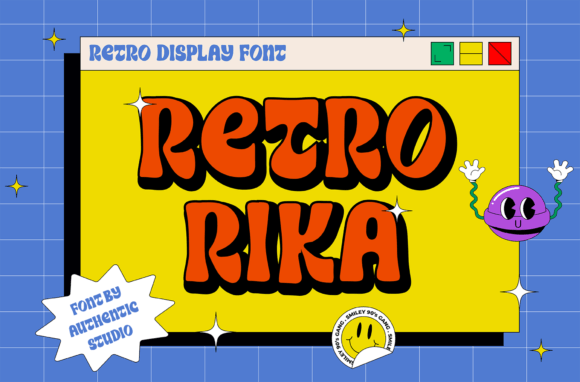
Retrorika: A Practical Guide to Using This Groovy Display Font
In the crowded landscape of digital typography, finding a typeface that balances distinct personality with functional versatility is often a challenge for designers and content creators. Retrorika emerges as a compelling option in this space, offering a cool, groovy aesthetic defined by its all-caps structure. It is not merely a decorative element but a tool that can anchor visual identity across various mediums, from physical crafts to high-resolution digital presentations. Understanding how this font operates within a professional workflow requires looking beyond its surface appeal to evaluate its usability, legibility, and long-term value.
Defining the Aesthetic and Core Characteristics
At its core, Retrorika is a display font, which means it is engineered primarily for headlines, titles, and short bursts of text rather than body copy. Its most immediate characteristic is the all-caps design. This choice eliminates the visual rhythm created by ascenders and descenders found in mixed-case typography, resulting in a uniform, block-like presence. For many creatives, this uniformity is an asset, providing a solid foundation for layout designs where balance and symmetry are paramount.
The "groovy" descriptor often associated with Retrorika points to its retro-inspired curves and softened edges. Unlike stark, geometric sans-serifs that can feel cold or corporate, this typeface injects warmth and nostalgia into a project. It evokes the design sensibilities of the 1970s, characterized by bold statements and organic shapes, yet it remains clean enough to feel contemporary. This duality allows it to bridge the gap between vintage charm and modern minimalism, making it a flexible asset for brands aiming to appear approachable yet stylish.
Practical Applications Across Media
The true test of any typeface is its performance in real-world scenarios. Retrorika demonstrates considerable flexibility, adapting well to both digital and physical formats. For digital designers, particularly those working on social media graphics, web banners, or landing pages, the font’s bold weight ensures high visibility even on small screens. When used for call-to-action buttons or section headers, it commands attention without overwhelming the user interface.
In the realm of print and physical crafts, Retrorika shines in contexts where impact is necessary. Greeting card designers, for instance, can leverage its playful nature to convey celebration and joy. The all-caps format works exceptionally well for short messages like "Happy Birthday" or "Thank You," where the text acts as much as an illustration as it does communication. Similarly, educators and publishers creating materials for younger audiences may find that the friendly, rounded forms of the letters engage readers more effectively than traditional serif fonts.
For entrepreneurs and small business owners, consistency in branding is crucial. Retrorika can serve as a primary brand font for logos and packaging, especially for businesses in lifestyle, food and beverage, or creative services sectors. Its distinct look helps establish brand recognition, ensuring that marketing materials stand out in a saturated market. However, it is essential to pair it with a neutral, highly legible sans-serif or serif font for secondary information to maintain readability and professional polish.
Evaluating Usability and Workflow Integration
From a technical standpoint, the usability of Retrorika depends on how well it integrates into existing design workflows. As a display font, it typically comes with a limited character set focused on standard Latin alphabets, numbers, and basic punctuation. Professionals should verify whether the specific license includes extended glyphs, multilingual support, or special characters if their projects require them. For most English-language projects targeting a general audience, the standard set is sufficient.
One practical consideration when using all-caps fonts is spacing. Retrorika, like many fonts in this category, may require manual kerning adjustments in certain combinations to ensure optimal visual balance. Designers working in software like Adobe Illustrator or Photoshop should be prepared to tweak letter spacing, particularly in larger headline sizes, to prevent the text from appearing too cramped or too loose. This extra step, while minor, contributes significantly to the perceived quality of the final design.
Furthermore, the font’s weight and stroke consistency make it reliable for various printing methods. Whether used in digital printing for brochures or screen printing for merchandise, the bold lines tend to hold up well against ink spread or resolution limitations. This reliability reduces the risk of production errors, a critical factor for freelancers and agencies managing client expectations and deadlines.
Who Benefits Most from Retrorika?
While Retrorika has broad appeal, certain professionals will find it more aligned with their specific needs. Graphic designers specializing in branding and identity will appreciate its ability to convey personality quickly. Marketers and social media managers can use it to create eye-catching visuals that stop users from scrolling past their content. The font’s energetic vibe supports campaigns aimed at engagement and interaction.
Hobbyists and crafters also represent a significant user base. The simplicity of the all-caps structure makes it accessible for those who may not have advanced typographic training. Creating custom decals, vinyl cuts, or hand-lettered signs becomes more straightforward when the font provides a strong, clear template. Additionally, educators designing classroom posters or presentation slides can use Retrorika to highlight key concepts, making learning materials more visually appealing and memorable for students.
However, it is important to note who might not benefit as much. Corporate entities requiring strict, formal communication styles may find the groovy aesthetic too informal. Similarly, projects involving long-form text, such as books or detailed reports, are not suitable for this font due to its display-oriented design. Using Retrorika for paragraphs would lead to reader fatigue and reduced comprehension, undermining the effectiveness of the content.
Limitations and Strategic Considerations
No typeface is without limitations, and acknowledging these helps in making informed design decisions. The primary limitation of Retrorika is its lack of lowercase letters. This restricts its use in contexts where sentence case is required for tone or clarity. Designers must be strategic, reserving the font for elements where emphasis and style take precedence over nuanced textual expression.
Another consideration is trend sensitivity. While retro styles have enduring appeal, they can also date a design if not handled carefully. To ensure long-term value, it is advisable to use Retrorika in combination with timeless design principles. Avoid overusing trendy color palettes or effects that might quickly become outdated. Instead, let the font’s shape and structure carry the visual interest, supported by clean layouts and ample white space.
Additionally, accessibility should always be a priority. All-caps text can be harder to read for individuals with dyslexia or other reading difficulties. When using Retrorika in public-facing materials, ensure that there is sufficient contrast between the text and background, and consider providing alternative text formats where necessary. This inclusive approach enhances the overall user experience and reflects professional responsibility.
Final Thoughts on Value and Implementation
Retrorika offers a distinct blend of style and functionality that can elevate a wide range of creative projects. Its strength lies in its ability to communicate energy and warmth through a simple, bold structure. For professionals and hobbyists alike, it represents a valuable addition to their typographic toolkit, provided it is used appropriately within its design constraints.
When evaluating whether to incorporate Retrorika into your next project, consider the message you wish to convey and the audience you aim to reach. If the goal is to create a memorable, engaging, and visually striking impression, this font delivers consistent results. By pairing it with complementary typefaces and adhering to best practices in spacing and layout, you can maximize its potential and achieve designs that are both aesthetically pleasing and effective. Ultimately, the value of Retrorika is not just in its appearance, but in how it enables creators to express their unique voice with confidence and clarity.