Golden Story Font: Evaluating Its Rugged Aesthetic for Modern Design Projects
In the crowded landscape of digital typography, finding a typeface that balances character with legibility is a constant challenge for designers. Golden Story emerges as a bold and dynamic choice for those seeking to inject rawness and authenticity into their visual narratives. Unlike clean, geometric sans-serifs or traditional serifs that prioritize neutrality, this font leans heavily into a distressed, weathered aesthetic. It is not merely a tool for text; it is a stylistic statement that evokes a sense of history, grit, and tactile imperfection.
For professionals aged 20 to 50 who are evaluating resources for posters, album covers, and branding materials, understanding the specific niche Golden Story occupies is crucial. This article explores the distinct qualities of this display font, compares it to broader typographic categories, and helps you determine when its rugged energy serves your project best—and when a cleaner alternative might be more appropriate.
The Distinct Character of Golden Story
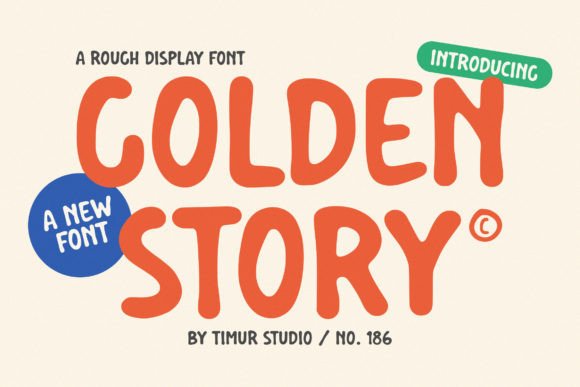
At its core, Golden Story is defined by its textured letterforms. The rough edges and distressed appearance are not accidental artifacts but deliberate design choices that give the font a vintage and weathered feel. This "raw" quality is what sets it apart from standard display fonts that may offer bold weights but lack surface texture.
The font exudes a sense of storytelling before a single word is read. When you use Golden Story, you are leveraging semiotics associated with durability, age, and manual craftsmanship. This makes it particularly effective for projects aiming for a retro and nostalgic feel or a contemporary and edgy look. The versatility lies in its ability to bridge these two eras; it feels equally at home on a 1970s-style rock poster as it does on a modern craft beer label that wants to emphasize artisanal production methods.
However, the impact of Golden Story comes with specific technical considerations. Because the letterforms are intricate and textured, they perform best at larger sizes. Using this font for body text or small captions can result in visual noise, where the distressed details merge and reduce legibility. Therefore, it is primarily a display font, intended for headlines, logos, and short bursts of text where immediate visual impact is required.
Comparing Textured Display Fonts to Clean Alternatives
When choosing typography, designers often weigh the tradeoffs between personality and clarity. Golden Story sits firmly on the side of personality. To make an informed decision, it is helpful to compare this approach with other common typographic strategies.
- Textured vs. Solid Weights: Standard bold fonts offer high contrast and readability but can feel sterile or corporate. Golden Story adds a layer of organic complexity. If your brand identity relies on precision, technology, or minimalism, a solid sans-serif is likely a better fit. If your goal is to convey warmth, heritage, or rebellion, the textured approach of Golden Story is superior.
- Vintage vs. Modern Minimalist: Modern minimalist trends favor ample white space and thin, clean lines. Golden Story disrupts this by filling negative space with texture. This makes it a strong alternative when you need to break through the visual monotony of minimalist designs. It commands attention because it looks "touched" and human-made rather than digitally perfect.
- Display vs. Body Typography: A common mistake is attempting to use distinctive display fonts for long-form content. Golden Story should never be paired with itself for paragraphs. Instead, it functions best when paired with a neutral, highly legible sans-serif or serif for supporting text. This contrast ensures the headline grabs attention while the body remains easy to read.
Ideal Use Cases and Practical Applications
Understanding where Golden Story shines requires looking at specific industry applications. Its rugged energy makes it a natural fit for sectors that value authenticity and tactile experiences.
Music and Entertainment
Album covers and event posters benefit immensely from the emotional weight of this font. For genres like rock, blues, folk, or indie, the weathered aesthetic aligns with the musical themes of struggle, history, and raw emotion. A band name set in Golden Story immediately suggests a certain sonic texture—gritty, unpolished, and genuine.
Artisanal Branding and Packaging
In the food and beverage industry, particularly for craft breweries, distilleries, and specialty coffee roasters, packaging design often seeks to communicate small-batch quality. Golden Story’s distressed look mimics the impression of old stamping or hand-printed labels. This subtle cue can influence consumer perception, suggesting that the product inside is crafted with care rather than mass-produced.
Event Promotion and Posters
For festivals, markets, or theatrical productions, posters need to stand out in cluttered urban environments. The high-contrast, textured nature of Golden Story ensures visibility from a distance. It adds a touch of character and grit that can make a standard event announcement feel like a collectible piece of art.
Limitations and Decision Factors
While Golden Story offers significant aesthetic benefits, it is not a universal solution. Recognizing its limitations is key to professional application.
Legibility Constraints: As mentioned, the distressed edges can blur at smaller sizes or on low-resolution screens. If your primary medium is mobile-first digital interfaces with small UI elements, this font may cause friction for users. Always test readability across devices before committing to it for digital headers.
Contextual Mismatch: The "rough and rugged" energy may clash with brands that need to project trust, stability, or clinical precision. For example, a financial institution, a healthcare provider, or a high-tech software company might find the weathered aesthetic undermines their message of reliability and cutting-edge innovation. In these cases, the font’s inherent chaos could be perceived as unprofessional.
Overuse Risk: Because the font is so visually dominant, using it too frequently can lead to viewer fatigue. It is most effective when used sparingly as an accent. A design saturated with textured typography loses its impact and becomes difficult to process. The principle of restraint applies heavily here; let Golden Story be the hero, not the entire cast.
Making the Right Choice for Your Project
Choosing Golden Story ultimately depends on the narrative you wish to convey. Ask yourself: Does my project benefit from a sense of history, imperfection, or manual craft? If the answer is yes, this font provides a ready-made aesthetic that would otherwise require complex graphic manipulation to achieve.
Consider the following checklist when evaluating this resource:
- Target Audience: Will your audience appreciate a vintage or edgy vibe, or do they expect clean, modern simplicity?
- Medium: Is the primary application print (posters, packaging) or digital? Print media often handles textured fonts better due to higher resolution capabilities.
- Pairing Potential: Do you have a complementary secondary font that can handle body text without competing for attention?
- Brand Values: Does "rawness and authenticity" align with your core brand message?
If you are aiming for a contemporary and edgy look, Golden Story offers versatility and impact that few clean fonts can match. It allows designers to infuse their work with a sense of timeless appeal and storytelling without needing extensive illustration skills. However, if your project demands absolute clarity, neutrality, or a futuristic feel, exploring simpler, non-textured alternatives may yield better results.
In conclusion, Golden Story is a powerful tool in the designer’s arsenal, specifically for those moments when character trumps conformity. By understanding its strengths in creating atmosphere and its limitations in readability, you can deploy it strategically to enhance the emotional resonance of your design projects. Whether for a nostalgic album cover or a bold brand launch, its rugged charm offers a distinct voice in a world of uniform typography.